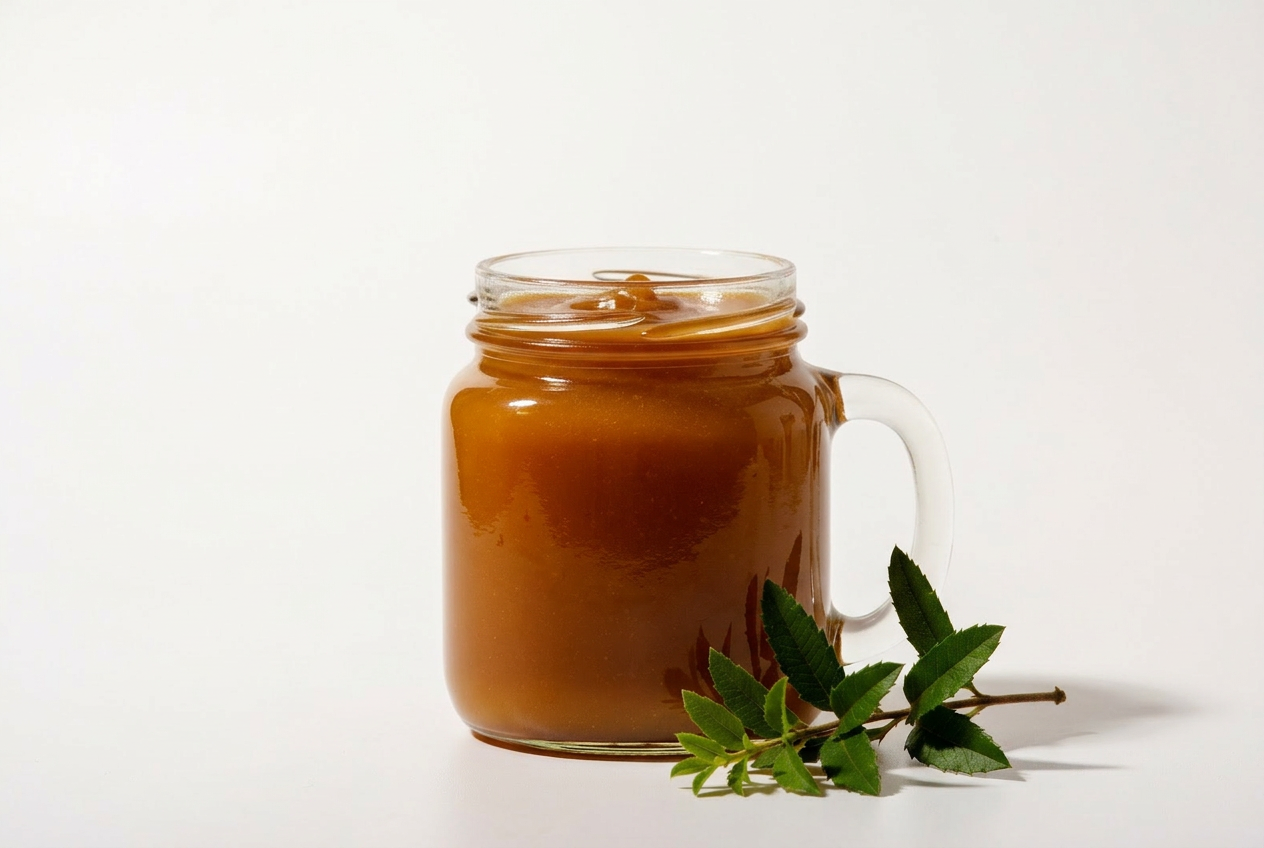
New Zealand's most studied honey — and the world's most verified. Backed by decades of clinical research and a grading system unlike any other.
Manuka honey is produced by bees that forage on the Manuka bush (Leptospermum scoparium), a flowering plant native to New Zealand and parts of southeastern Australia. What sets it apart from every other honey — including high-quality raw honey — is a single compound: methylglyoxal (MGO).
MGO is formed from dihydroxyacetone (DHA), a compound found at unusually high concentrations in Manuka flower nectar. When bees process the nectar into honey, DHA converts to MGO over time — giving Manuka its distinctive, clinically studied antibacterial activity that persists even in low-oxygen, high-moisture wound environments where most antibacterials fail.
The Māori people of New Zealand used the Manuka bush medicinally for centuries before European contact. Modern research has confirmed much of what traditional use suggested: Manuka honey has measurable, verifiable antibacterial properties that most honeys do not. A specialized, sterilized form (Medihoney) has received FDA clearance as a wound care product — though this is distinct from consumer Manuka honey sold in stores.
Not all Manuka is equal — and the label tells you exactly how potent it is, if you know how to read it. Two main systems are in use. For a deeper dive, read our UMF vs MGO guide.
Entry level — general wellness
Therapeutic — immune support, daily health
High therapeutic — wound care, targeted health
Ultra premium — clinical-grade potency
Rare — collector/maximum potency
The gold standard. UMF is a comprehensive quality mark licensed by the UMF Honey Association of New Zealand. It tests for three markers simultaneously: MGO (antibacterial potency), Leptosperin (proves genuine Manuka origin — cannot be faked), and DHA (indicates freshness and future MGO development).
A simpler system that measures just one thing: the concentration of methylglyoxal in mg/kg. Easy to understand and compare across brands. The limitation is that MGO alone can be added artificially — it doesn't prove the honey is genuinely from Manuka. UMF's leptosperin test closes that gap.
Independent investigations have found that the amount of "Manuka honey" sold globally each year is several times greater than New Zealand's total Manuka honey production. Counterfeiting is rampant. The safest approach: buy from UMF-licensed producers (verifiable at the UMF Honey Association website) or from MGO-certified brands like Manuka Health that publish third-party lab results. See our guide to spotting fake honey for more detail.
What the science actually says — not just marketing claims
This information is for educational purposes only and is not intended as medical advice. Consult a healthcare professional for medical concerns.
Medihoney (a specialized, sterilized medical-grade Manuka product) has received FDA clearance for wound care. Research suggests Manuka may disrupt bacterial biofilm formation — the protective layer that makes wound infections difficult to manage. A 2011 study in the Journal of the Royal Society Interface explored this mechanism. Note: Medihoney is a regulated medical product, not the same as consumer Manuka honey.
A study in the Journal of the International Academy of Periodontology found Manuka honey significantly reduced plaque formation and gingivitis severity compared to control groups. Its activity against Streptococcus mutans — the primary cavity-causing bacterium — has been demonstrated in multiple lab studies.
Manuka's antibacterial and soothing properties make it a popular choice for sore throats. A peer-reviewed review in Frontiers in Microbiology examined Manuka's broad-spectrum antibacterial properties, including activity against antibiotic-resistant bacteria like MRSA in laboratory settings.
Research published in the European Journal of Clinical Microbiology & Infectious Diseases confirmed MGO's antibacterial activity against H. pylori, the bacteria responsible for most gastric ulcers. Manuka also shows activity against Clostridium difficile (C. diff). Promising — though large-scale human clinical trials remain limited.
Manuka's low pH, antibacterial properties, and osmotic effect (drawing moisture from bacterial cells) have made it a popular ingredient in natural skincare. Applied as a mask, it may help reduce P. acnes bacterial load without the drying effect of conventional acne products — though clinical evidence for this specific use remains limited.
One of the most significant findings in Manuka research is its efficacy against antibiotic-resistant bacteria including MRSA (methicillin-resistant Staphylococcus aureus). Unlike antibiotics, bacteria do not appear to develop resistance to MGO's multi-mechanism attack — making Manuka an active area of medical research.
📋 Educational Disclaimer: The health information above is for educational purposes only and is not intended as medical advice. While Manuka honey has significant research support — particularly for its antibacterial properties — evidence quality varies by use case, and consumer Manuka products are not the same as FDA-cleared medical products like Medihoney. Always consult a qualified healthcare professional before using honey for any medical condition. Do not use in place of prescribed treatment.
Honest comparisons to help you decide what to buy
Both Manuka and raw honey contain enzymes, antioxidants, and natural hydrogen peroxide activity. For everyday use — sweetening food, general wellness, allergy support — high-quality raw honey from a trusted source delivers most of the benefits at a fraction of the cost ($10–$20 vs $40–$100).
Verdict: Buy Manuka if you want its specific antibacterial properties. Buy raw honey for daily use.
Wildflower honey is complex, seasonal, and terroir-driven — its flavor and antioxidant profile shift with the region and season. It's a food experience. Manuka is not primarily a food; it's a functional product. Comparing them on flavor misses the point of both.
Verdict: Use wildflower for cooking, cheeseboards, and daily enjoyment. Choose Manuka if you're specifically interested in its MGO-based antibacterial properties.
Daily wellness maintenance, general immunity support, mild digestive use. Best value for people new to Manuka or using it as part of a daily routine.
Sore throat soothing, oral health maintenance, moderate antibacterial activity. The sweet spot for most people who want meaningful MGO levels without the premium price of higher grades.
High-activity grade. Chosen by those with more specific wellness goals. If you're considering this grade for a health concern, consult a healthcare professional for guidance.
Maximum potency grade. Most consumers do not need this for routine use. For wound care, specialized medical-grade products (Medihoney) should be used under professional supervision. If you're buying UMF 20+ to put in your morning tea, you're overspending.
If you're using honey primarily as a sweetener — in coffee, baking, salad dressings — Manuka is the wrong choice. Heat above 95°F destroys MGO and most of its beneficial compounds. You'd be spending $50 for the same result as $12 raw honey. Similarly, if you don't have a specific health goal, a high-quality raw honey or buckwheat honey (also high in antioxidants) is a more sensible everyday choice.
1 teaspoon daily on an empty stomach for general wellness. Let it dissolve slowly — don't swallow immediately. This maximizes contact time with throat and upper digestive tissues.
Add to tea or warm water that has cooled below 95°F. Boiling water destroys MGO and enzymes. Let your cup sit for 2–3 minutes before stirring in Manuka.
Apply a thin layer to clean skin as a face mask for 15–20 minutes, then rinse. Effective for acne, minor irritation, and dry patches. Use UMF 10+ or higher for skin applications.
Apply a thin layer to minor cuts, scrapes, or burns before bandaging. Look for medical-grade products (Medihoney) for more serious wounds. UMF 15+ minimum for wound use.
Apply directly to gums or dissolve slowly in your mouth after brushing. Some practitioners recommend a daily teaspoon as part of a gum health protocol. UMF 10+ or higher.
Cooking with Manuka defeats the purpose. High heat destroys MGO and all enzymes. Use regular raw honey or wildflower honey when baking or cooking — save Manuka for unheated applications.
Store Manuka honey at room temperature in a cool, dark location — away from direct sunlight and heat sources. Never refrigerate (this accelerates crystallization and makes it difficult to use). Keep the lid tightly closed to prevent moisture absorption, which can cause fermentation.
Manuka honey has an indefinite shelf life when stored properly. MGO levels actually increase over the first 1–2 years as DHA continues converting, then stabilize. Don't worry about crystallization — it's natural and reversible. To re-liquefy, place the jar in a bowl of warm (not boiling) water for 15–20 minutes.
Given the scale of Manuka counterfeiting, verification matters before you spend $50+ on a jar.
The UMF trademark is licensed — only approved producers can use it. Verify any UMF producer on the UMF Honey Association website (umf.org.nz). MGO certification from Manuka Health NZ is also third-party verified.
The label should state "Product of New Zealand" — not "Packed in New Zealand" (which means it may have been produced elsewhere). Australian Manuka is real but legally distinct and typically lower in MGO. Only New Zealand Manuka meets the official New Zealand government MPI standard.
Legitimate producers batch-test and can trace every jar. A batch number allows you to cross-reference lab results that many certified brands now publish online. No batch number is a red flag.
Certified UMF 15+ Manuka costs $45–$65 for 8.8oz from reputable brands. If you're seeing UMF 15+ for $15, it isn't what it claims to be. Price is not a guarantee of quality, but dramatically below-market pricing is a reliable fraud signal. See our complete guide to spotting fake honey.
Certified, authentic Manuka from trusted brands — matched to what you need
As an Amazon Associate, TrueComb earns from qualifying purchases. Full disclosure
Industry leader in certified Manuka with over 45 years of production. UMF licensed, third-party tested, and the standard by which other brands are measured.
Raw, unpasteurized Manuka using KFactor certification (pollen-count based). Best value for daily wellness use. Fully traceable to New Zealand hives.
Premium certified UMF 20+ for maximum MGO potency. One of the most affordable high-UMF options with rigorous batch testing and third-party verification.
Cold-extracted and minimally processed to retain full pollen, propolis, beeswax particles, and royal jelly alongside MGO activity. The most "whole food" Manuka available.
Honest answers to the most common Manuka questions
UMF 5+ or UMF 10+ is appropriate for most people using Manuka as part of a daily wellness routine. You get real MGO activity at a sensible price. UMF 15+ and above are typically chosen by those with more specific wellness goals, though you should consult a healthcare professional before using honey for any medical purpose.
MGO and UMF measure related but different things. MGO measures only methylglyoxal concentration. UMF measures MGO plus leptosperin (a unique Manuka marker that proves authenticity) and DHA (a freshness indicator). A high MGO number without leptosperin verification could theoretically be faked by adding MGO artificially. UMF is the more comprehensive standard. See our full UMF vs MGO breakdown.
Honey does not truly expire when stored properly in a sealed container at room temperature. Archaeologists have found 3,000-year-old honey in Egyptian tombs that was still edible. That said, MGO levels peak around 1–2 years after production (as DHA finishes converting) and then very slowly decline over many years. For maximum MGO content, use within 2–3 years of the harvest date on the label.
Never give any honey — including Manuka — to infants under 12 months. Raw honey can contain Clostridium botulinum spores that are harmless to adults but can cause infant botulism, a serious illness. For children 12 months and older, Manuka is safe in normal food amounts. Always consult a pediatrician before giving Manuka to children for any wellness purpose.
There is no established clinical dose for Manuka honey. Many people consume 1–2 teaspoons per day as part of their wellness routine. Some people use more when dealing with a sore throat, but this is based on traditional use rather than clinical dosing guidelines. For wound care, specialized medical-grade products (like Medihoney) should be used under medical supervision. Always consult a healthcare professional before using Manuka for any medical purpose.
Technically yes, but it defeats the purpose. Heat above 95°F (35°C) begins degrading MGO, enzymes, and other bioactive compounds. By the time your oven hits 350°F, you've destroyed everything that makes Manuka worth buying. For cooking and baking, use a quality wildflower or clover honey instead and save your Manuka for cold applications.
Both come from Leptospermum plants, but they are different species. New Zealand Manuka (L. scoparium) has been the subject of most published research and is subject to the New Zealand MPI government standard. Australian Manuka can be legitimate and may have antibacterial properties, but is generally lower in MGO and less rigorously regulated. The UMF certification system applies specifically to New Zealand Manuka.
Rich, earthy, and distinctly different from most honeys. You'll notice herbal or medicinal undertones — slightly bitter, with a warming quality. Higher UMF grades tend to be more intensely flavored and less sweet. Most people either love it or find it an acquired taste. It's less sweet and more complex than clover honey and far more intense than acacia. For flavor-forward applications, wildflower honey is the better choice.
Each variety has its own unique characteristics and benefits